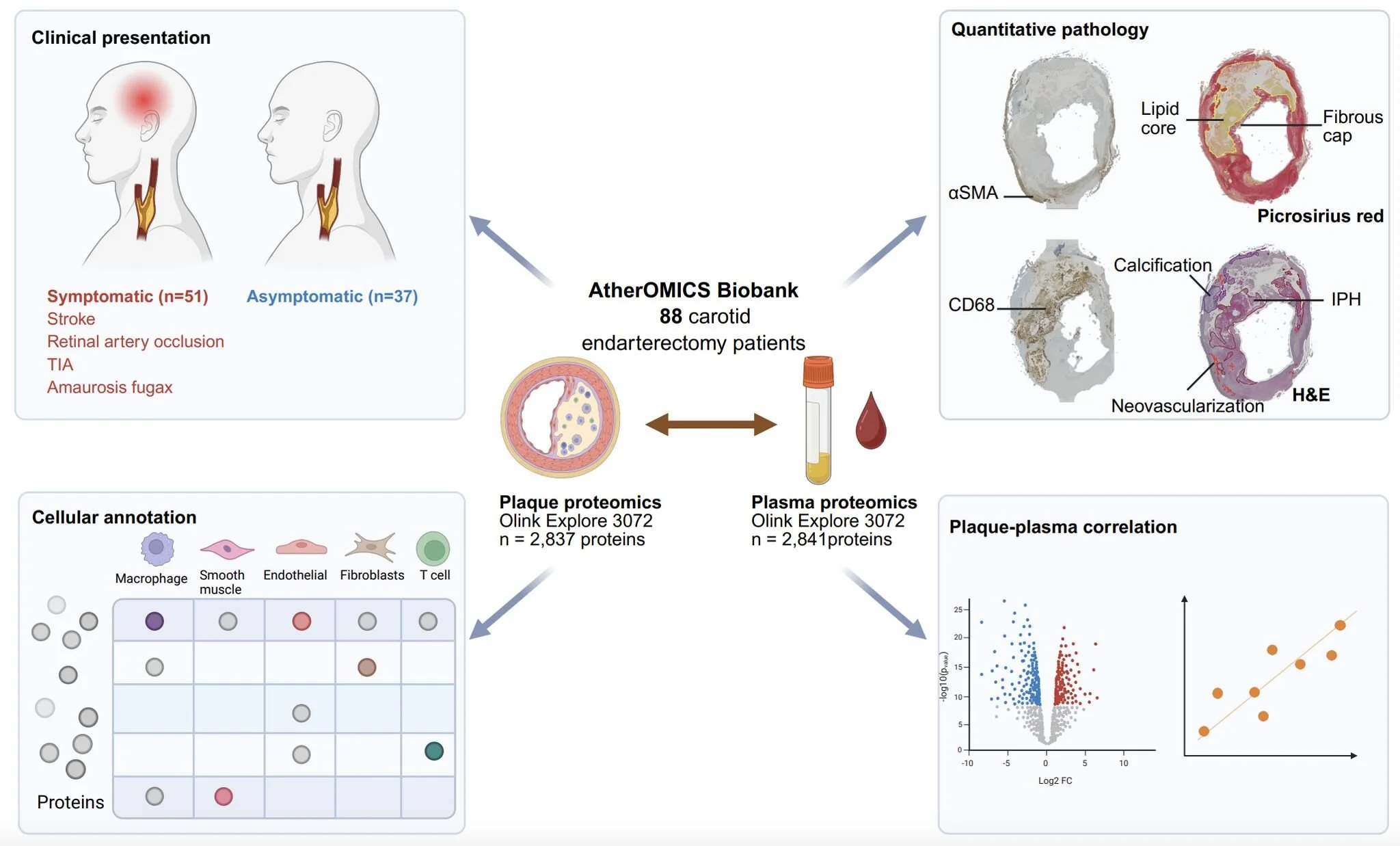
Paired plaque and plasma proteomic analyses in our AtherOMICS cohort
Great to share the new preprint from our lab exploring proteomic signatures associated with symptomatic atherosclerosis. While histopathology has historically been the standard for characterizing plaque stability, it does not fully explain the clinical fate of each plaque.
Using paired plaque and blood samples from symptomatic and asymptomatic patients in the AtherOMICS biobank, we performed proteomic profiling in carotid plaque tissue and identified molecular signatures that better explain symptomatic presentation than conventional histopathology.
Some topline results:
👉 across 2,837 plaque proteins, 19 were differentially expressed in symptomatic plaques that were enriched in pathways related to neutrophil degranulation and the innate immune system
👉 FGFBP1 showed the strongest association with symptomatic presentation
👉 a proteomics-based model discriminated symptomatic vs. asymptomatic plaques better than a histopathology-based model (AUC 0.83 vs. 0.66).
👉 integrating plaque proteomics with snRNA-seq data allowed us to derive cell type-specific proteomic signatures that correlated with histopathological features
👉 plaque and plasma protein levels showed limited overall correlation (median ρ=0.11), but selected proteins such as FGFBP1 showed concordant plasma associations, highlighting some potential as biomarkers of symptomatic disease
Fantastic led work by Lanyue Zhang and a great example of the potential of the AtherOMICS biobank, which is run tirelessly every day by many of the co-authors, especially Luka Živković. Also, a great collaboration with Nikolaos Tsilimparis, MD, PhD, FEBVS and our vascular surgery colleagues.
https://www.medrxiv.org/content/10.64898/2026.08.23.26361143v1